Classical guitar style
Classical Guitar Style refines and makes your playing precise with fingerstyle playing method and nylon-string tone. With Groovy Guitar, our classical lessons teach you to master posture, right-hand patterns, and long-lasting melodies of such masters as Andrés Segovia. Learn classical guitar online or offline and build a good foundation in technique and expression.
classical history
A Brief History of Classical Guitar Technique
The history of the classical guitar is from ancient plucked instruments like the vihuela and the lute to the refined six-stringed marvel of today. From the Renaissance vihuela and Baroque guitar, it progressed with innovations like nylon strings and single strings in the 19th century.
Legendary guitar builder Antonio de Torres revolutionized guitar building, and Francisco Tárrega developed right-hand technique with rest stroke (apoyando) and free stroke (tirando), developing the contemporary classical guitar style. Modern classical guitar technique is furthered by current training in barre chords, tremolo, and rasgueado (flamenco strumming).These platforms have fostered the growth of classical guitar and the sharing of techniques and interpretations
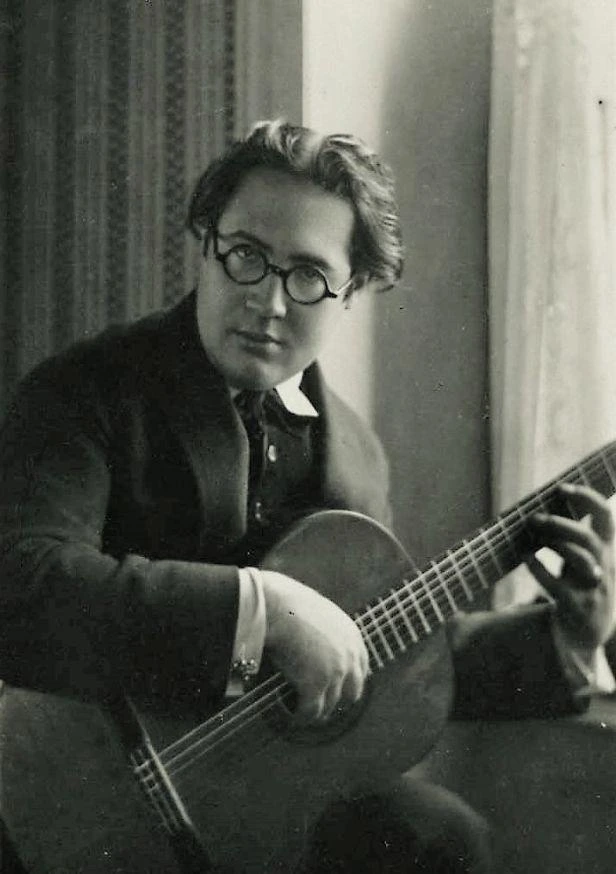
Andres Segovia
what you'll learn
1. Proper Posture & Hand Placement
Refinement is needed in classical guitar, not just for sound, but also for sitting position!
You will learn to sit in upright back, left foot resting on a footstool, and the guitar resting on your left thigh. This will allow your fingers to slide freely and naturally over the fretboard for cleaner sounds and reduced tension.
2. Fingerstyle Technique (Tirando & Apoyando)
Fingers are your picks—each of them has a function to fulfill.
Instead of a pick, you’ll master fingerpicking on thumb (p), index (i), middle (m), and ring (a). You’ll discover two basic strokes: tirando (free stroke) for playing melodic style, and apoyando (rest stroke) for playing firm, projecting notes.
3.Reading Classical Notation & Tablature
Classical music speaks in scores—time to learn the language!
You’ll get comfortable reading standard music notation (not just tabs) to understand rhythm, note values, dynamics, and finger positions. This skill opens the door to centuries of sheet music from Bach to Barrios.
4. Arpeggios & Classical Etudes
Warm up with purpose—practice like a maestro in training.
You’ll practice arpeggios (broken chords) and etudes (short music exercises) that enhance your finger independence, rhythmic control, and phrasing. These are the classical guitar universe’s fitness exercises.
5. Dynamics & Tone Control
Make your guitar sing, whisper, or growl—all with your fingers.
You’ll explore how slight changes in finger angle, nail shape, and plucking strength affect your tone. Classical guitar is all about emotion and expression, so you’ll learn to shape each note with intention.
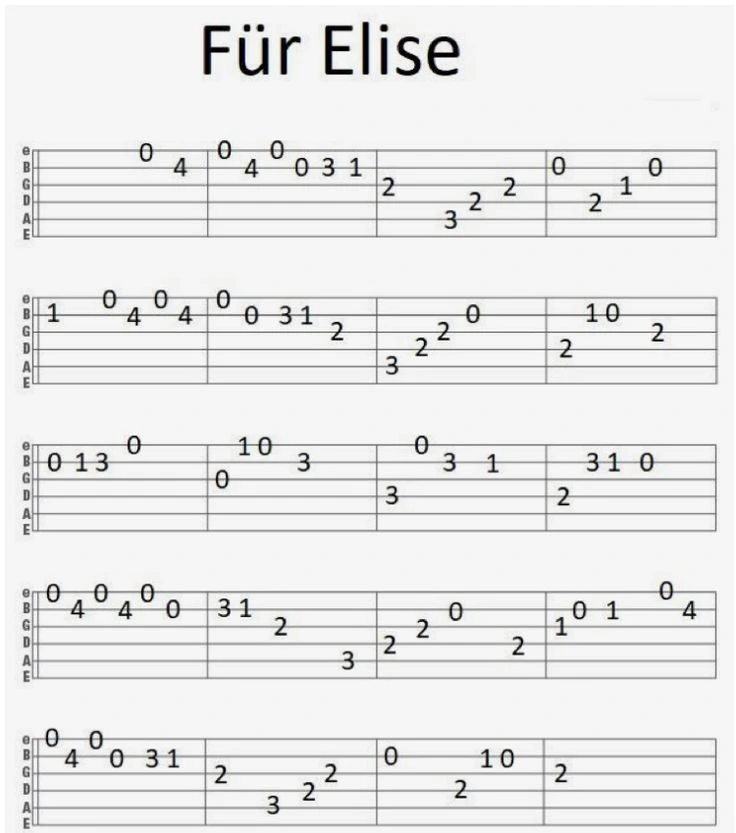
"Fur elise" by
ludwig von beethoven
Für Elise“ (Bagatelle No. 25 in A minor) is perhaps Ludwig van Beethoven‘s most well-known piano piece, featuring his nostalgic melody and easy–to-play format. Written circa 1810 and released after his death in 1867, the subject of “Elise“ remains unknown. This classic is still a favorite among students who are learning classical music theory and melodic construction on piano and guitar.